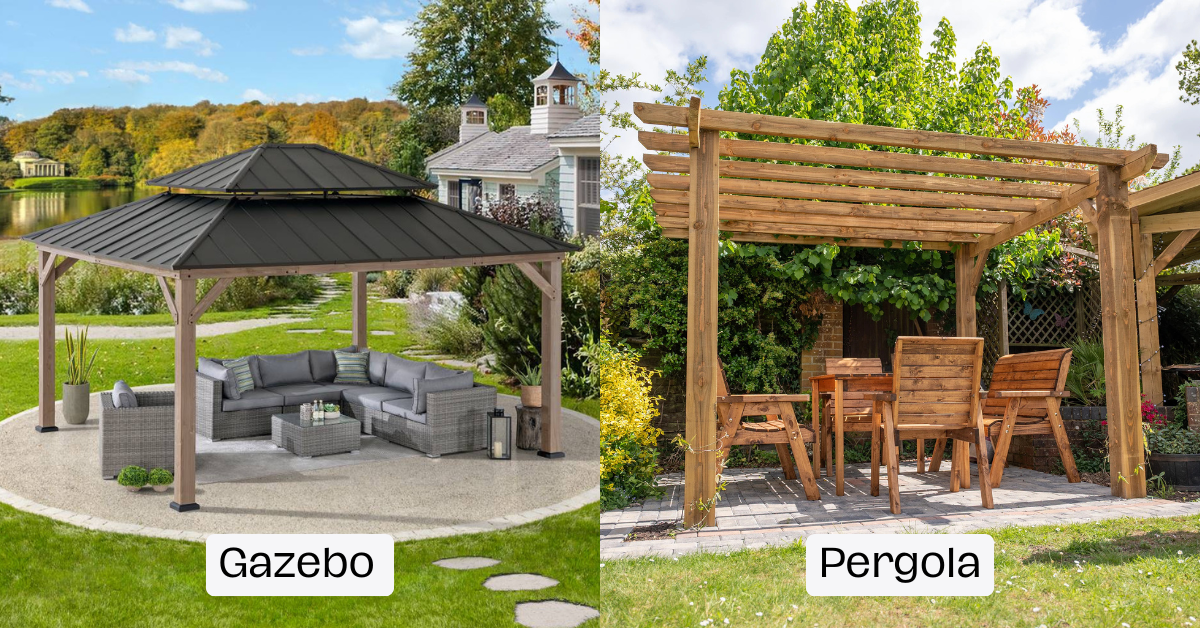
If you start looking for garden ideas, you will quickly see pergolas and gazebos. Yes, Pergola and gazebo both improve your outdoor space. So, your outdoor space feels more welcoming and nicer. But both work in different ways. Pergola gives open space with light shade. So, a gazebo gives full cover and strong weather protection. In fact, choice depends on your garden size, budget, and how you plan to use the space.
You can see all that this guide explains the main differences clearly. So you can pick what fits your home best.
1 What Are Pergolas and Gazebos for Homeowners?
So, pergolas and gazebos make your outdoor space feel more comfy and inviting. Also, you get a nice spot to relax. You can sit with family or enjoy time with guests. Your home also looks more beautiful from the outside. In many cases, property value can increase too. First, a pergola uses vertical posts and horizontal beams. Most pergolas come with an open roof. Some designs use slatted tops.
Others use louvred panels. You still get light shade, and your garden stays open and fresh. You can set up a simple seating spot or a nice dining area. Many people grow climbing plants like jasmine, roses, or ivy. As time passes, these plants spread and form a natural green roof. It also gives extra shade. Now, when you look at a gazebo, you see a different setup.
Moreover, the gazebo gives full cover from above. Most designs come with a solid roof and stand on their own. You usually see square, hexagon, or octagon shapes.
2 Pergola vs. Gazebo: What Are the Main Differences?
Well, the main difference comes from the roof design. First, pergolas use an open roof. Sunlight can pass through easily. Fresh air also moves freely. You see that some modern pergolas also use retractable canopies or louvred roofs. So you get better control over shade and cover.
In fact, gazebos have a solid roof. Rain stays out completely. You also get full shade all day. Because of this, gazebos work better in different weather conditions.
Quick Comparison Table
Pergolas usually look sleek and modern. Gazebos create a stronger visual feature with a more traditional garden feel.
3 Rain, Wind, and Cold Weather Performance
Pergolas and gazebos make your outdoor space more comfortable. You get a nice spot to relax or enjoy time with friends and family. Your home also looks more attractive. Property value can also increase.
It is suggested that you focus on weather protection. Gazebo performs better in rain and wind. Notably, a strong, solid roof blocks water easily. You can sit outside during light rain without worry. Outdoor furniture also stays safer and drier. On the other hand, a pergola gives mainly shade and partial cover. Sunny days feel more comfortable under it. Heavy rain protection stays limited in basic designs.
However, modern pergolas change this a bit. Polycarbonate roofs and retractable canopies add better protection. So, you get more use across different weather conditions.
4 Permission Rules for Pergolas and Gazebos
In many cases, you do not need full planning permission for either structure. You can often build a pergola or gazebo under permitted development rights. Your project must stay within local size limits. You need to follow those limits to move ahead without permission.
Now, check your local planning authority before installation. Rules can change based on your location and property type.
5 Which Structure Works Better for Small or Large Gardens?
Your garden size matters when you choose.
Pergolas work well in small and large gardens. You get flexible rectangular shapes. You place it along your patio. You also place it near your wall. Narrow garden spaces also work fine.
Gazebos need more open space. You need extra room because of the wide structure. You place it freely in an open area. In fact, a small garden can feel tight when a large gazebo sits inside.
General Size Guide
Your garden size helps you pick the right option.
Small garden under 30 square metres fits a pergola best. You save space and keep the area open.
Medium garden between 30 and 60 square metres fits both options. You can choose a pergola or a gazebo based on your needs.
Large garden over 60 square metres fits a gazebo well. You get a strong and spacious outdoor setup.
So a gazebo can become a strong focal point in your outdoor space. And smaller gardens usually feel more balanced with a pergola. For compact gardens, pergolas usually offer the smarter solution.
6 Materials, Strength, and Long-Term Durability
Material choice changes how long it lasts. It also changes how much care you need and how much you spend overall.
Material Comparison
So, it handles changing weather very easily. Timber gives a nice natural look. You just need regular care to keep it strong and in good shape.
7 Customisation Options For Pergolas and Gazebos
Both structures allow upgrades and personal changes. Pergolas give you more flexibility. You can change and improve them later as your needs change.
Popular Pergola Additions
Retractable canopies or shade sails
String lights or LED lighting
Trellis panels for climbing plants
Outdoor curtains or bamboo blinds
Privacy screens
Popular Gazebo Additions
Mosquito net curtains
Side panels for rain and wind protection
Outdoor heaters
Built-in lighting
Electrical connections for outdoor use
So, these additions help you create a more comfortable and functional outdoor environment.
8 Traditional vs Modern Garden Style Match
You start with your garden style.
So, a gazebo fits a traditional garden nicely. A decorative roof and classic design suit flower borders, formal lawns, rose gardens, and cottage-style spaces. In fact, a pergola fits a modern outdoor space well. Aluminium pergolas match decking, stone patios, gravel paths, and simple furniture.
A timber pergola offers a balanced option. It works in both rustic and modern garden styles. Mixed garden style needs balance. A wooden pergola with climbing plants gives a natural, even feel.
9 Property Value and Kerb Appeal Benefits
Okay, a well-designed outdoor structure improves your home's appeal. So, buyers value a clean and useful outdoor space. Pergolas and gazebos both add visual interest and improve first impressions. Also, pergolas attract more buyers. Flexible design and light structure make them feel less fixed. They also fit well with patios and garden layouts.
On the other hand, gazebos create a strong visual impact. Very big designs can feel too heavy in a small garden. So choose a size that fits your space. Good setup, regular care, and a design that matches your home style always give better results.
10 How to Choose The Right Structure for Your Garden?
Both pergolas and gazebos give strong benefits. So, your outdoor space decides the better choice.
Choose a Pergola If You
You should choose a pergola if you have a smaller or narrow garden. It also suits you if you want a structure connected to your house. You may also like it if you prefer an open and airy outdoor space. It works well when you enjoy climbing plants and natural shade. It also fits you better if you need a more budget-friendly option.
Choose a Gazebo If You:
You should choose a gazebo if you need strong protection from rain and wind. It also suits you if you have a large garden with enough open space. You may prefer it if you like a traditional decorative feature. It works well when you want a separate outdoor dining or relaxing area.
It also fits you if you need a fully sheltered garden retreat. Pergola works well in open gardens with a natural feel.
Key Takeaways
- You can see all that this guide explains the main differences clearly. So you can pick what fits your home best.
Conclusion
FAQs
1. Which material is best for a gazebo?
Your budget and care needs decide the best material. Wood gives a classic and best look. Regular care keeps it in good shape. Aluminium and steel give strong durability. Low maintenance makes them easy to use.
2. Can gazebos handle all weather conditions?
Gazebos work well in normal weather. Sun, light rain, and mild wind are fine. Heavy snow, storms, and strong winds need extra care. Strong fixing is important. So always check product details before buying. Make sure it suits all-season outdoor use.
3. How should I protect a pergola during winter?
You should clear leaves and debris before winter starts. Good drainage keeps your space safe from water damage and wood rot. You should treat wooden pergolas with a weatherproof coating. So they handle cold and moisture better.
You can also add a cover or upgrade the roof. It gives extra protection in winter.

Noman
Content WriterNoman Ghaffar is the CEO of Adventure Coupon, a leading platform for online deals and discounts. He has extensive experience in digital marketing and e-commerce. Under his leadership, the company has grown rapidly, helping users save money through smart deals. His vision is to make online shopping more affordable and accessible for everyone
Comments 0
No comments yet. Be the first to share your thoughts!